
LOGUE MEDIA · WEBSITE DESIGN
Make your services easy to find, understand and choose.
Clear pages. Real proof. A useful next step.
Your website should help customers work out whether you can help them.
We design WordPress websites around your services, the questions buyers ask and the action each page needs to support.
Agree the structure first. Then review the design with real copy, images and an enquiry route that makes sense.
What is included in business website design?
Website design combines page structure, visual layout and the customer journey. Logue Media builds WordPress websites using Divi, with agreed navigation, responsive pages, forms and technical setup. The brief separates the website build from optional content production and ongoing marketing.
How is the page structure decided?
We start with the services the business actually provides and the questions customers need answered. The page map identifies service pages, supporting resources and enquiry routes. It is reviewed before the design is expanded across the website.
Will the website work on mobile?
Responsive layouts are part of the agreed build. Mobile review covers readable text, usable navigation, image sizing and forms. Important customer actions are checked on smaller screens rather than relying only on a desktop design preview.
Can we edit the website after handover?
The handover identifies the editing tasks your team needs to perform in WordPress and Divi. Access, training and any restricted functions are agreed in the project scope. More complex changes can be quoted separately.
Can customers see how you can help?
Your website has a simple job. Explain the service. Show why it fits. Make the next step clear.
Products, Services, Solutions and Industries offer useful entry points. Each destination still needs a clear answer and next step.
We review the structure before the design. Keep useful pages. Resolve overlaps. Agree any URL changes before the rebuild.
Structure first. Design the customer journey around it.
Help customers understand, choose and act.
Start with Understand. Hover, tap or focus on each step to reveal the next.
-
Find the right service.
Use familiar service names and a direct answer. Help search visitors understand the page without starting at the homepage.
-
See whether it fits.
Explain the scope. Show a relevant project. Answer the questions customers ask before deciding.
-
Make a useful enquiry.
Give the page one clear next step. Ask for project details that help us respond.
Real content makes the design review useful.
Review the design with your actual service copy, photographs and customer questions. Placeholders can hide a page that does not explain the business clearly.
Approve the important page types first. Then apply the agreed design consistently across the site.
Match the website design to the change your business needs.

A new business website
Give your business a clear home online. Start with the services customers need and the questions they ask.
- Map the services and resource pages customers need first.
- Create consistent layouts that work on desktop and mobile.
- Place real copy and brand images into the design review.
- Build an enquiry form around the information your business needs.
- Agree the core page structure before expanding the site.
The brief sets the initial page count and functions. Extra content production or custom features need their own agreed scope.

An existing website redesign
Keep what works. Fix what gets in the way. Review the content, navigation and useful URLs before redesigning the site.
- Review existing content before deciding what to keep or rewrite.
- Identify useful URLs and agree redirects for any address changes.
- Simplify navigation where customers struggle to find a service.
- Review the new layouts with real content from the current business.
- Check agreed enquiry routes and migration requirements before launch.
Agree the migration responsibilities before changing addresses. Preserve useful routes while resolving the problems that prompted the redesign.
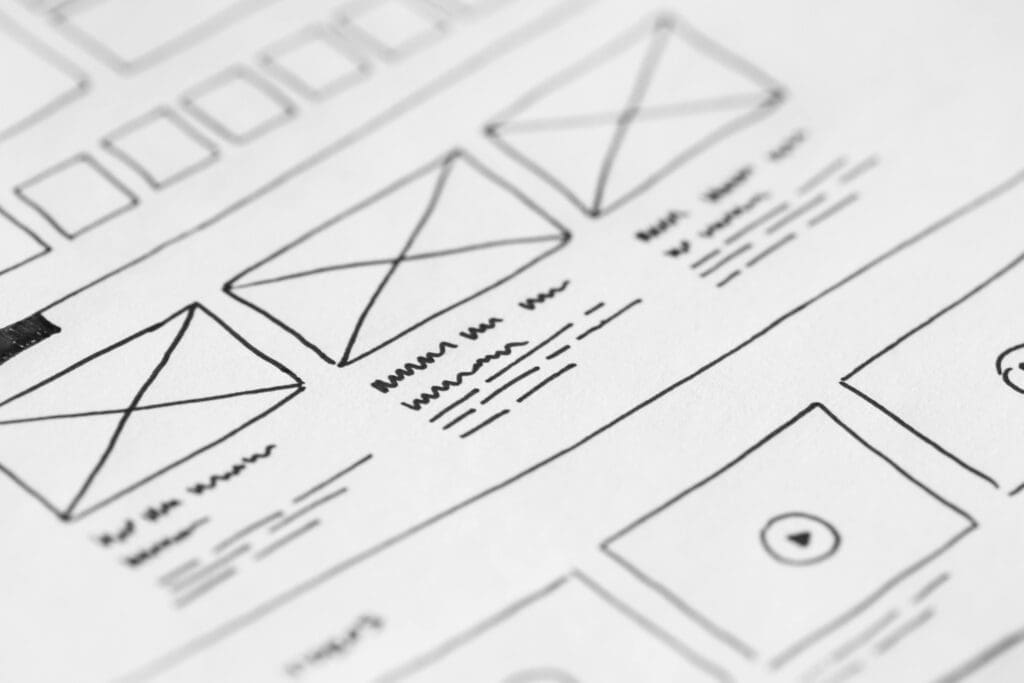
Service-led site expansion
Add a page when you have something distinct to explain. Connect the new service or resource to the existing website.
- Give each new page a distinct service or resource purpose.
- Write specific scope and answers for that page’s customer questions.
- Connect the addition to its parent page and relevant existing resources.
- Use supporting images and project evidence that fit the new topic.
- Check for overlapping content before adding the page to navigation.
Add a page when the business has something distinct to explain. A new location name alone does not justify another service page.
Website design responsibilities belong in the brief.
A clear proposal names both the visible pages and the work behind them. This avoids treating every later request as a design adjustment.
| Build area | Agree before production |
|---|---|
| Pages | Service pages, resources, legal pages and any content migration. |
| Design | Brand assets, layout review and desktop/mobile acceptance. |
| Content | Supplied or separately commissioned copy and visual assets. |
| Forms | Fields, recipients, confirmation and privacy information. |
| Technical setup | Hosting access, core plugins, agreed analytics and launch checks. |
Choose an agreed website project, then decide on care.
Published website packages start at $3,700 + GST.
Use the pricing guide to compare options. Confirm the current price, page capacity and inclusions in your proposal.
A Package covers the agreed website project. A Plan covers recurring care. Confirm content, paid licences and migration work before approving either.
A service website built around a local business.

Matt Bell’s Locksmith
A Central Coast business needed a website that introduced the business and explained its locksmith services.
Why this example is relevant.
A locksmith website supports a practical service enquiry. Customers need to recognise the help available and find the contact route. That makes this a relevant example for businesses selling local services.
Review the website structure before the design spreads.
List the real services, audience questions and required actions. Review the page relationships and the material available for each page.
Approve the key layouts, branding and mobile direction. Make structural changes here while they are easier to assess.
Create the agreed WordPress pages and connect the navigation, copy, images and forms. Review real content rather than empty layout placeholders.
Check the important customer journeys and resolve agreed defects. Complete launch responsibilities, access and editing guidance.

Need the review and handover detail?
The process guide explains who supplies and approves content, how scope changes are recorded and what is checked before launch.
Website Design Central Coast.
Based in Umina Beach, we work in person with Central Coast businesses. Larger solution projects can include regional visits, with remote website delivery available across Australia.


Questions to settle before the website design brief.
Settle page structure, content responsibility and the design review before production expands.
Will every service need its own page?
Only when it has a distinct customer purpose and enough useful information. Closely related services may work better together. We avoid creating many similar pages simply to target keyword variations.
Can you write the website copy?
Yes, as an agreed content scope. We use the business’s source knowledge and check the wording with the people responsible for the service. Copywriting responsibilities and approvals are identified before the build schedule is agreed.
Will the design guarantee search rankings?
No. Clear structure, useful copy and sound technical setup support search readiness. Rankings also depend on competition, authority, search systems and continued work. The build scope identifies what will actually be delivered and checked.
How long will the website take?
The schedule is agreed after reviewing page volume, functions, supplied assets and approval availability. Missing content or changes to the approved structure can affect delivery. We do not set one timetable for every website.
Connect the design brief to its supporting work.
 Microsites & Landing PagesHover, tap or press EnterMicrosites & Landing PagesGive a campaign its own focused destination when the main website would add unrelated choices. Define the offer and response before extending the business site.Explore focused destinations →
Website Optional ServicesHover, tap or press EnterWebsite Optional ServicesSeparate the design work from supporting copy, photography and integrations. Use the service guide to identify missing inputs and assign responsibility before production starts.Explore supporting services →
 Website Optional ServicesHover, tap or press Enter
Website Care & MaintenanceHover, tap or press EnterWebsite Care & MaintenanceGive the completed website an agreed update and checking routine. The design proposal defines the build; the care Plan defines the ongoing tasks and support boundaries.Agree ongoing care →
 Website Care & MaintenanceHover, tap or press Enter
Explain the change your business website needs.
Include your current site and the service or customer journey that needs attention.
Prefer to talk? 0411 199 997 · info@logue.group